Untamed Assembly Backstage of Utopia
Latvian Pavilion at the 61st International Art Exhibition – La Biennale di Venezia
Untamed Assembly: Backstage of Utopia
Pavilion
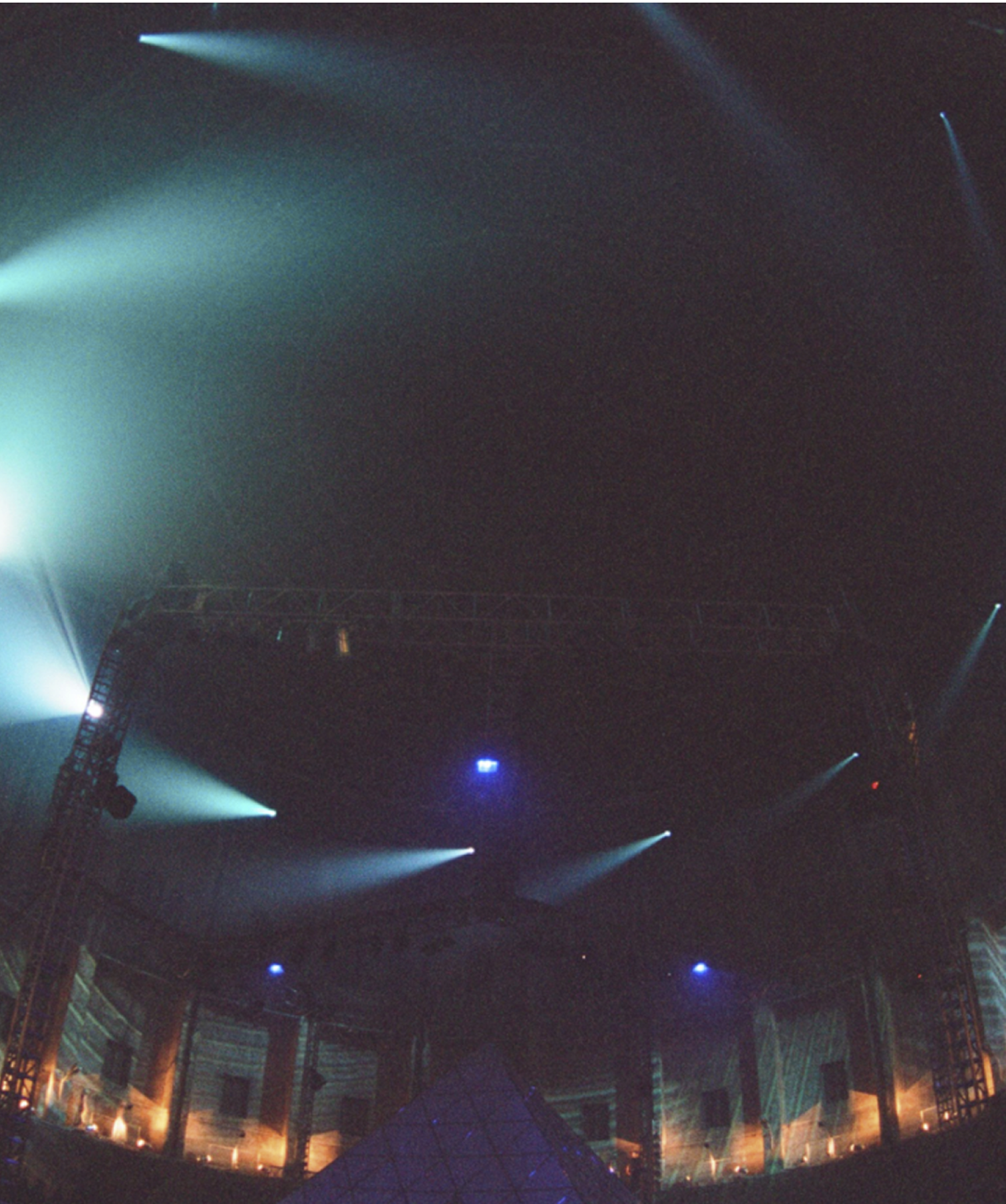
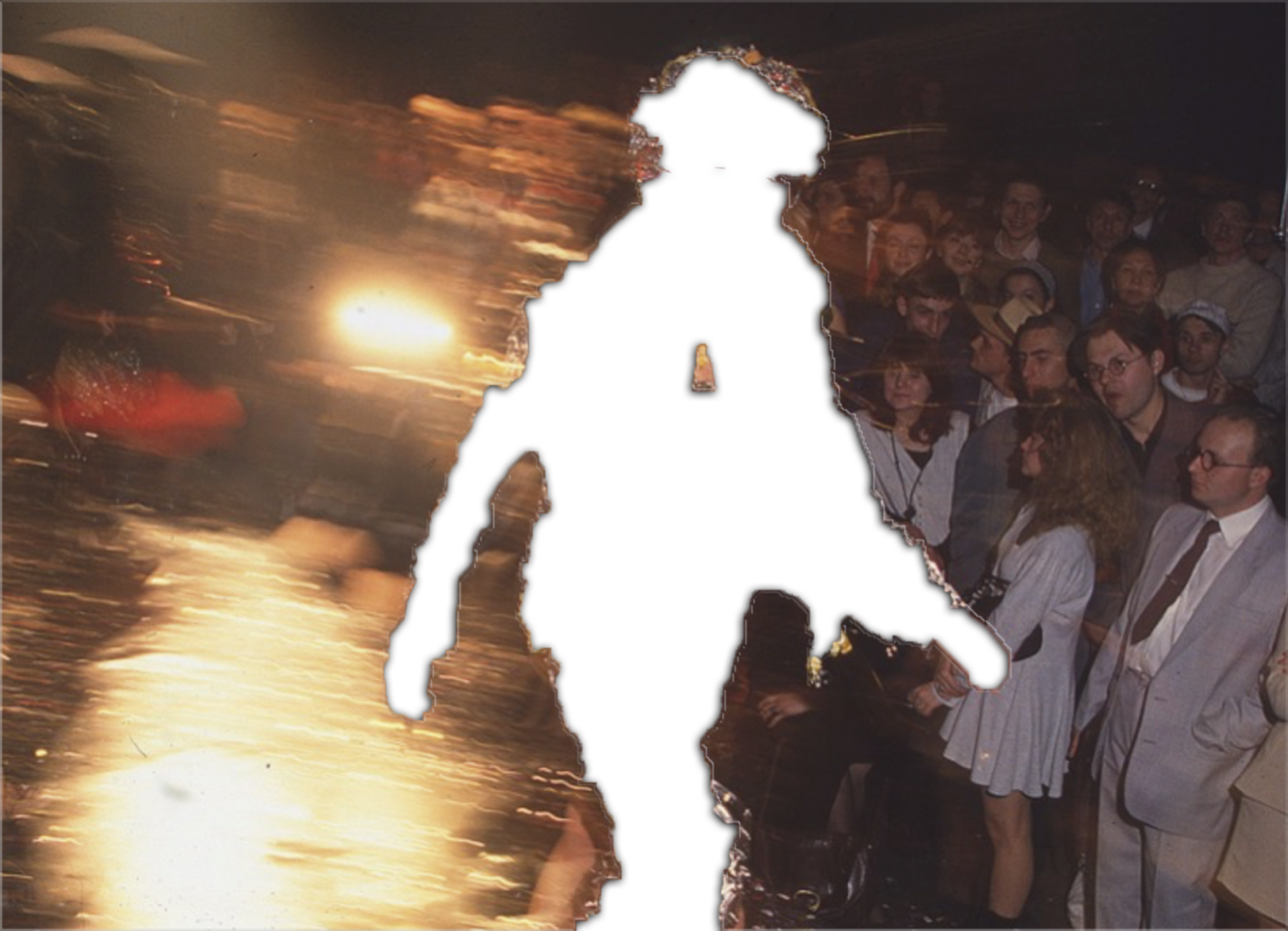
Untamed Assembly: Backstage of Utopia presents newly commissioned work by the interdisciplinary artist duo MAREUNROL’S that has emerged in dialogue with the archives of Untamed Fashion Assemblies (UFA) – a series of experimental fashion, art, and performance events held in Riga between 1990 and 1999 that were initiated by alternative fashion designer Bruno Birmanis.
Utopia
The pavilion approaches Untamed Fashion Assemblies as lived spaces – sites where freedom was tested through dress, bodies, collaboration and daring. Linking past and present, the exhibition highlights the role played by utopian thinking in moments of transition. It asks how collective imagination, desire, and visibility are produced when political and economic systems are in flux, and how futures can be imagined and new forms of togetherness rehearsed behind the scenes rather than on centre stage.
Backstage
MAREUNROL’S installation rethinks the legacy of UFA from the perspective of the present and is itself conceived of as a backstage – an in-between space of preparation, invisible labour, joy, improvisation and human connection. Drawing on histories of the Assemblies and the visual elements of a fashion show, the clothing rack – one of the most ubiquitous elements of any backstage – becomes a holding device within the installation and the architecture for its stories. Other motifs that run through MAREUNROL’S practice, such as birds and textile sculptures, also appear in the installation, carrying with them memories of flight, risk and fragility.
Transition
Held during a decade of profound political and social transformation, UFA expanded existing notions of fashion by facilitating crossovers into visual art, drag, music, and club culture. Defying conservative social norms inherited from the Soviet era, the Assemblies functioned as an alternative to the emerging commercialised fashion markets of the West. They were improvised, collaborative and often chaotic environments where students and international stars shared the same stage. Makeshift scenography, DIY costumes and radical styling generated an atmosphere of rare intensity. Media coverage from Vogue, The Guardian, the BBC, MTV and others briefly positioned Riga as an unexpected avant-garde hub – experimental, carnivalesque and fearless.
Collective imagination
Young Baltic designers such as Bruno Birmanis himself, Juozas Statkevičius and Sandra Straukaitė appeared alongside figures such as Paco Rabanne, Vivienne Westwood, Zandra Rhodes and Andrew Logan. A number of emerging designers who would later become global icons, including Viktor & Rolf, passed through UFA as fashion students.
In-between spaces
The Assemblies became spaces where bodily display and costume could be tools for negotiating new identities. They were platforms for sexually charged gestures, drag, role play and deliberate exaggeration as well as innovations in cut and silhouette. A carnivalesque suspension of social norms accompanied serious experimentation with image and form.
Freedom
Across the installation, the spirit of UFA is captured in newly digitised footage and photographs from Birmanis’ archive that show the rehearsals, preparations, afterparties, jury moments and audience reactions. Several thematic lines anchor the presentation. References to travel and the crossing of newly opened borders foreground the extraordinary logistical conundrums that UFA managed to solve in the process of organising events on an international scale and building a transnational community and network. Scarcity was often a driving force for creativity, with unexpected materials coming together to form bold collages: blankets and pillows are reimagined as costumes, sheets of paper transformed into evening gowns. Political freedom, newly gained and protected through the barricades, was also exercised through bold performances, such as the 1991 opening of UFA at Riga’s central Dome Square.
Risk
Reflecting on this period, Birmanis recalls: “It was like an internal explosion that had been brewing in the minds of all creatively thinking people. First, there was the feeling that we wouldn’t be taken to the KGB. Second, it was as if floodgates had opened, and a wave carried everyone along. Only later did a much deeper stage of understanding begin – what freedom truly means” (Arterritory, 2013).
Future-making
The Latvian Pavilion returns to UFA to ask how we might imagine freedom, risk and possible futures today, and what can be gathered now from the utopian visions of these festivals.
Artists
MAREUNROL’S

MAREUNROL’S is a Riga-based interdisciplinary artist duo—Mārīte Mastiņa-Pēterkopa and Rolands Pēterkops. Working at the intersection of visual art and design, they continually push boundaries, often positioning fashion beyond its traditionally functional role. The duo’s distinctive approach is a poetic expression of magical realism, emphasising narrative as an artwork, expressed through their interdisciplinary practice, which comprises fabric and textile sculptures, fashion design collections, installations, video and sound art, drawings, photography collages, and costume design for opera and theatre.

MAREUNROL’S have participated in numerous international competitions, festivals, biennials, and group exhibitions, including the Arnhem Fashion Biennal, International Talent Support (ITS) competition, Barcelona 080, RIBOCA 2, The Prague Quadrennial of Performance Design and Space, and more. They have also exhibited their work at art venues such as the contemporary art centre kim?, Riga, La Gaîté Lyrique, Paris, Casino Luxembourg, The Riga Contemporary Art Space, among others.

In 2009, they received both Grand Prix, the two highest prizes at the 24th international fashion and photography festival Hyères and in 2016, they were among ten European nominees for the prestigious International Woolmark Prize. MAREUNROL’S made history as the first-ever Latvian brand to be included in the official programme of Paris Fashion Week, and their garments and artworks are in the archive collection of the Latvian National Museum of Art, as well as numerous private collections, including the VV Foundation.

Their retrospective exhibition at the Museum of Decorative Arts and Design in Riga was the museum’s most visited exhibition of 2019, and in 2020 it was nominated for the Kilogram of Culture prize in the ‘best visual arts exhibition’ category. In 2024, their exhibition Invisible Exercises was nominated for the Purvītis Prize, one of Latvia’s most prestigious art prizes. The duo is also active in education, appearing as guest lecturers in art academies all over the world.
Bruno Birmanis

Bruno Birmanis (BB) is an artist, performance maker, and curator whose practice unfolds at the intersection of conceptual fashion, the body, and spatial imagination. His work approaches fashion not as a functional system but as a cultural language – capable of articulating ideas, emotions, and collective experience.

Birmanis graduated from the Riga School of Applied Arts as a metal designer and jewellery artist. Since the mid-1980s, he has been actively engaged in alternative and experimental fashion, exhibiting and performing across Eastern and Western Europe. In the late 1980s, in collaboration with designer Uģis Rūķītis, he created Postbanalism Ball , a seminal multimedia performance work staged over thirty times across the Soviet Union. The project was widely recognised by international media as a defining expression of perestroika-era cultural transformation.

In the early 1990s, BB initiated and created the Untamed Fashion Assembly, an independent platform dedicated to alternative fashion and performative practices. Emerging at a moment of political and social rupture, the Assembly became a transnational space for freedom, non-conformism, and creative risk, bringing together young artists from across Europe and redefining fashion as a performative and critical act.

Birmanis’s works and performances have been presented in Rome, Venice, Paris, London, Moscow, and Vilnius, including at the Latvian National Museum of Art. Alongside his artistic practice, he has worked across architecture, interior design, and visual culture, collaborating with leading architectural studios and producing large-scale cultural and fashion events.

Currently, Birmanis is also active as an educator. He heads the Styling Department at the Liepāja Secondary School of Art, Music and Design and lectures internationally. His recent work focuses on process as a generator of value, intergenerational collaboration, and artistic practice as a vital form of cultural responsibility.
Curators
Adomas Narkevičius

is a Lithuanian curator and art historian based in London and the Founding Director of Upė Foundation. He curated the 15th Kaunas Biennial, Life After Life (2025), and is the co-curator of the Latvian Pavilion at the 61st Venice Biennale (2026). From 2021 to 2025 he was Curator at Cell Project Space, London, and he previously worked at Rupert – Centre for Art, Residencies and Education in Vilnius, where he led the Alternative Education, Public, and Residencies programmes.
Inga Lāce

is Chief Curator at the Almaty Museum of Arts, Kazakhstan. She was C-MAP Central and Eastern Europe Fellow at MoMA, New York (2020–2023) and has been a curator at the Latvian Centre for Contemporary Art (2012–2020). In 2023 she co-curated New Visions—The Henie Onstad Triennial for Photography and New Media in Oslo, as well as the Kaunas Biennial, the contemporary art festival Survival Kit 14, and the Ljubljana Biennale of Graphic Arts.
Team
Commissioner:
Solvita Krese
Artists:
MAREUNROL’S
(Mārīte Mastiņa-Pēterkopa & Rolands Pēterkops) — new commission

Bruno Birmanis
— Untamed Fashion Assembly, founder, archive (1990-1999)
Curators:
Inga Lāce, Adomas Narkevičius
Architect:
Līva Kreislere
Graphic Designer:
Valters Kalsers
Junior Graphic Designer:
Agnese Bebre
Project Manager:
Austra Bērziņa
Producer:
Elīza Anna Reine
Communications:
Dana Zālīte, Alexia Menikou
Managing Editor of the Catalogue:
Andra Silapētere
Research and Contracts Coordinator:
Māra Žeikare
Fundraising:
Dace Gulbe
Art technician:
Ansis Bergmanis
Video Editor:
Andris Grants
Video technical support:
Andrejs Mefodovskis
Lighting Technician:
Romāns Medvedevs
Sound:
Rolands Pēterkops
MAREUNROL’S Assistants:
Kristina Rezviha, Samanta Blekte, Arina Molčanova
Archive Assistant:
Sophia Buck
Project Assistants:
Sigita Urlovska, Laura Baiba Balcere, Paula Sakne, Paula Stutiņa, Helēna Reina Geige
Organized by:
Latvian Centre for Contemporary Art
Commissioned by:
Ministry of Culture of the Republic of Latvia
Latvian Centre for Contemporary Art
The Latvian Centre for Contemporary Art (LCCA) is an NGO that has been supporting contemporary art events in Latvia since 2000, approaching social processes critically and creatively.


For more information: www.lcca.lv
The LCCA organises art events and exhibitions, conducts research and education projects, and produces publications addressing the latest developments in art and society while exploring their historical contexts. The centre’s main areas of focus include the cultural and political contexts of Latvia, the Baltics, Eastern Europe, and the broader post-socialist region, with particular attention paid to issues of gender and minority representation, layers of individual and cultural memory, and environmental and ecological perspectives.

Cooperation with local and international artists and institutions is of special importance to the LCCA, and this is reflected in the nomadic nature of its activities. Exhibitions, educational programs, and other events take place in a variety of venues, including museums, schools, libraries, abandoned buildings, and urban spaces. One notable example is the annual international contemporary art festival Survival Kit, one of the most significant contemporary art events in the Baltics, which has been organised by the LCCA since 2009.
Press kit
Press materials available here

For international press enquiries please contact Alexia Menikou: am@alexiamenkou.com

For press inquiries in Latvia please contact Dana Zālīte: dana@lcca.lv